
“Severe lower back pain and numbness… don’t give up—consult us first.”
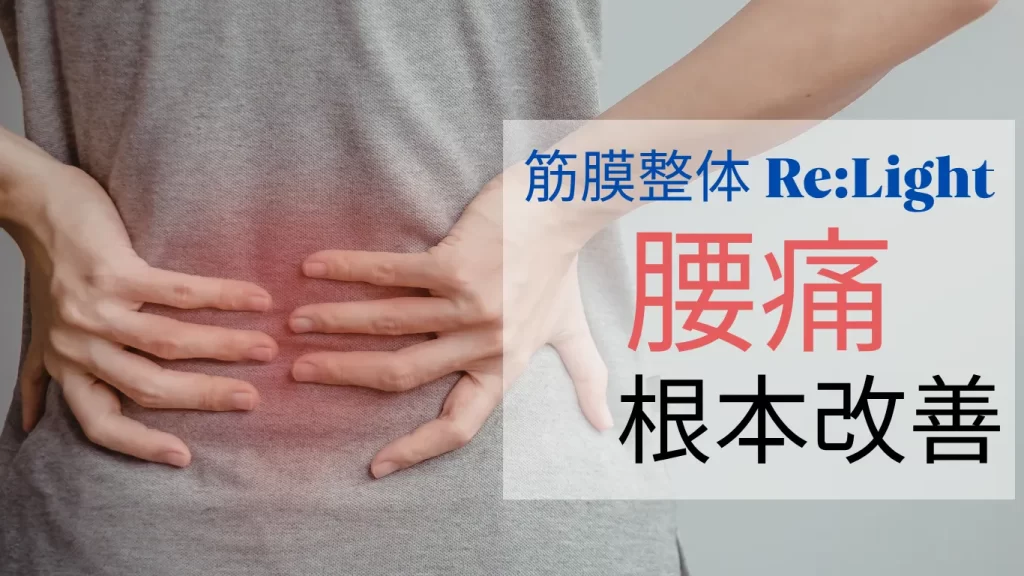
Are you experiencing any of these problems?
Your concerns
Leave it to Re:Light!
“My neck and lower back pain improved, and my daily life and work have become much easier!”
The current state of lower back pain among Japanese people
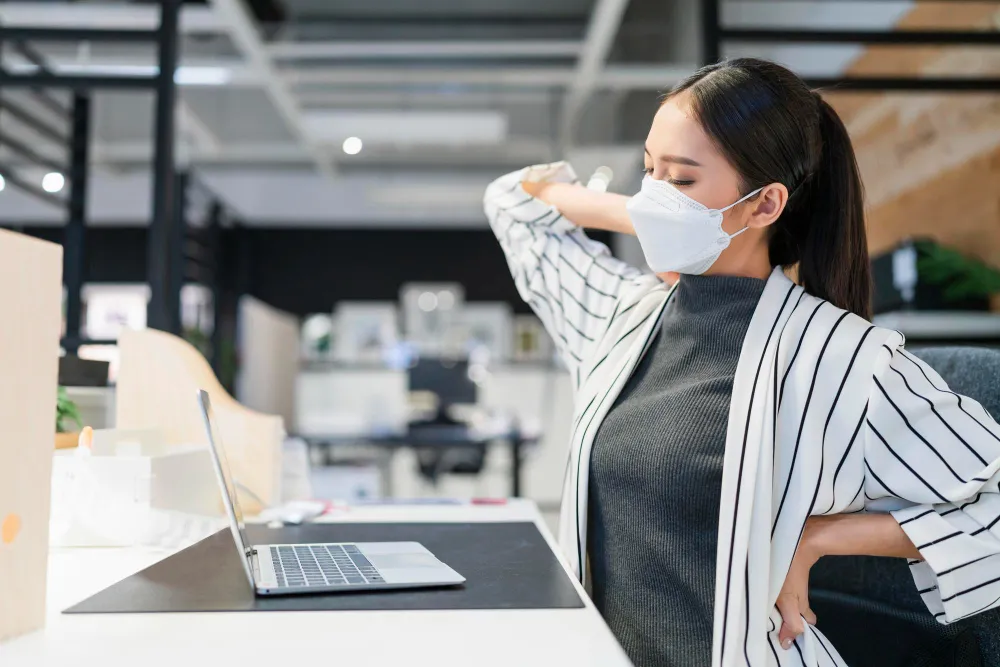
“In recent years, Japan has been referred to as a ‘nation of lower back pain,’ due to the increase in desk work and the generally lower muscle mass among its population.
According to research on low back pain, about 85% of cases are considered non-specific, meaning the exact cause isn’t clearly identified. This shows that even specialists often can’t pinpoint a single reason for back pain.
Common approaches to treating lower back pain

Common treatments for lower back pain include medications such as pain relievers and topical patches, nerve block therapies like injections, and supportive measures such as wearing a back brace.
Advantages and Limitations of Symptomatic Treatments
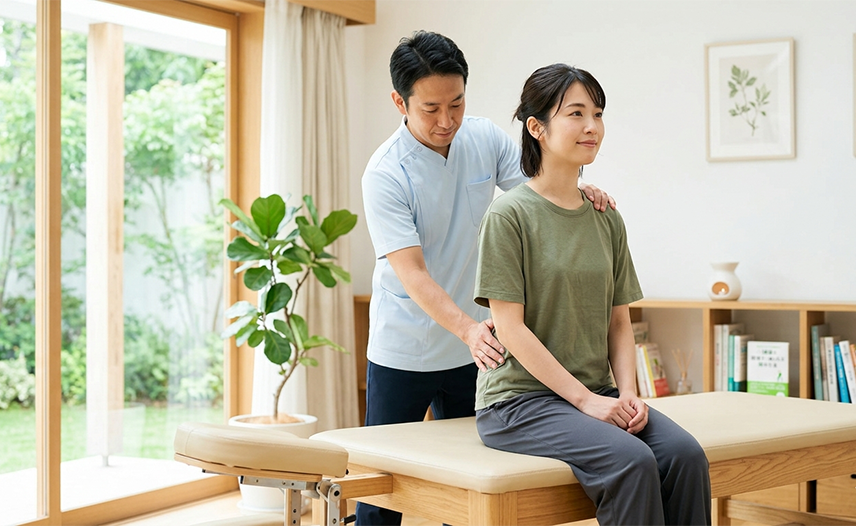
Wearing a back brace can be effective for temporary pain relief, but long-term use can stiffen the muscles around the lower back and pelvis, creating dependency on the brace.
Similarly, long-term use of painkillers or nerve block injections can reduce their effectiveness over time and may not lead to a fundamental improvement in the condition.
The Approach Needed to Improve Lower Back Pain
To improve lower back pain, it’s important not just to treat the lower back itself, but to carefully assess the patient’s overall condition and address the root causes while considering the connections throughout the entire body.
Our Approach
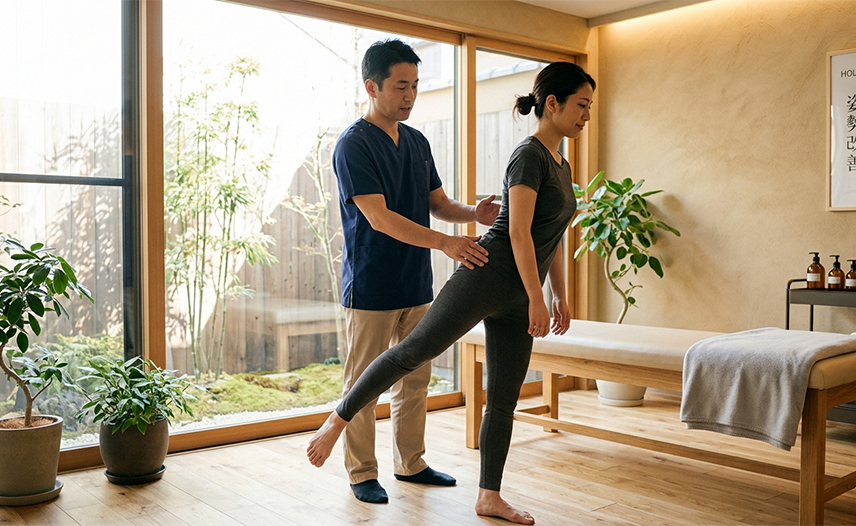
At Re:Light, we do not focus only on the lower back itself.
We pay attention to posture, body usage, and how everyday movements are connected.
The sense of discomfort around the lower back may also be related to how the hips, back, or legs are being used, as well as overall body balance.
During sessions, we review these movement patterns together and support awareness of body usage in ways that place less strain on the lower‑back area.
Rather than limiting the experience to the session itself, we value sharing perspectives that can be easily applied in daily life.