
“Struggling with PMS? Before you give up, let’s talk.”
Are you experiencing any of these problems?
Your concerns
Leave it to Re:Light!
“My PMS symptoms have improved so much!”
Premenstrual Syndrome (PMS), a common concern unique to women.
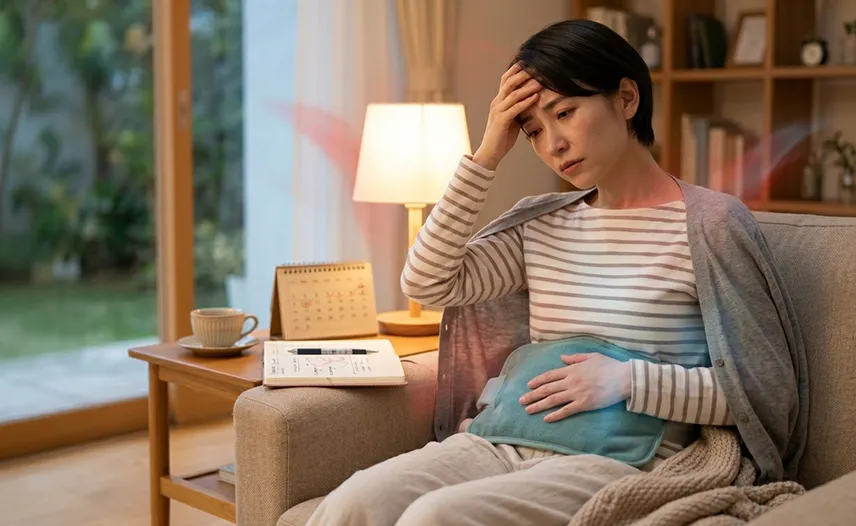
Premenstrual Syndrome (PMS) is one of the most common health concerns unique to women.
It manifests through a wide range of physical and emotional symptoms, which can vary in type and severity from person to person and month to month.
Mental and physical symptoms of PMS
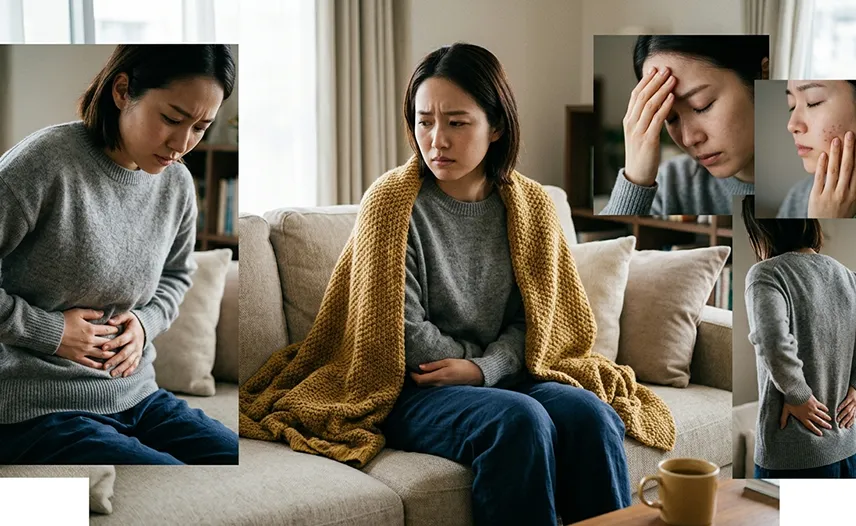
PMS can involve the following symptoms:
Emotional Symptoms Irritability, mood swings, feeling down or depressed, anxiety, and loss of concentration.
Physical Symptoms Breast tenderness or pain, lower abdominal pain, lower back pain, headaches, bloating, weight gain, overeating, fatigue, and acne or skin breakouts.
Possible causes of PMS
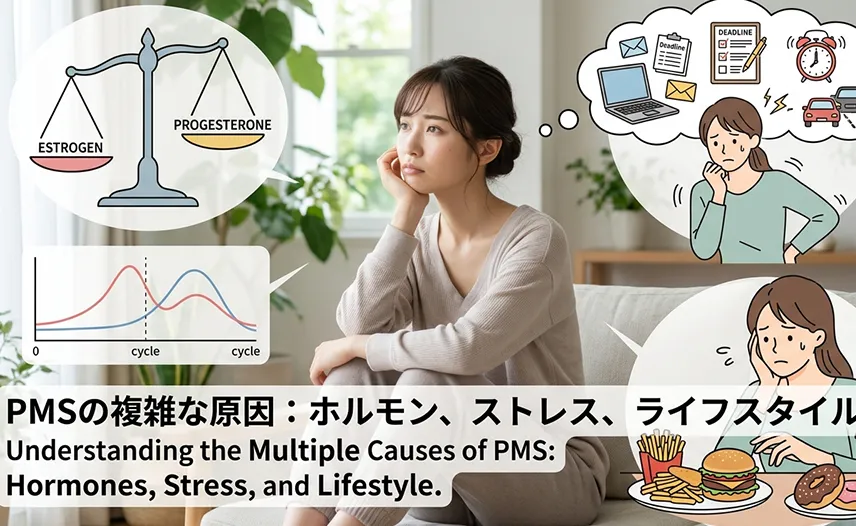
While the exact cause of PMS is not yet fully understood, the primary factor is believed to be the sharp fluctuations in the female hormones progesterone and estrogen following ovulation. These shifts affect neurotransmitters in the brain, such as serotonin.
However, PMS is often triggered by a complex interplay of multiple factors, making it difficult to pinpoint a single cause in many cases.
The Connection Between PMS and Fascia
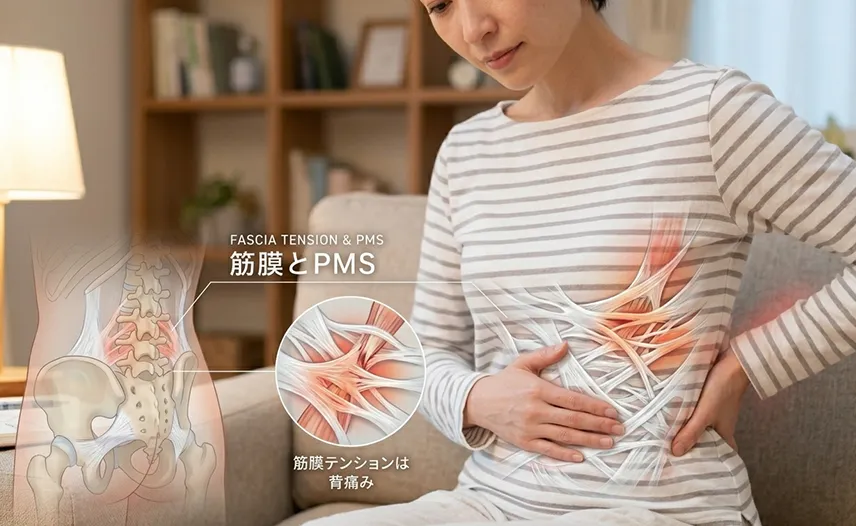
Fascia is often a contributing factor to the causes of PMS.
This tissue can become stiff or twisted when subjected to external stimuli, such as injuries, surgery, or the physical strain of daily life.
How changes in the fascia affect the body
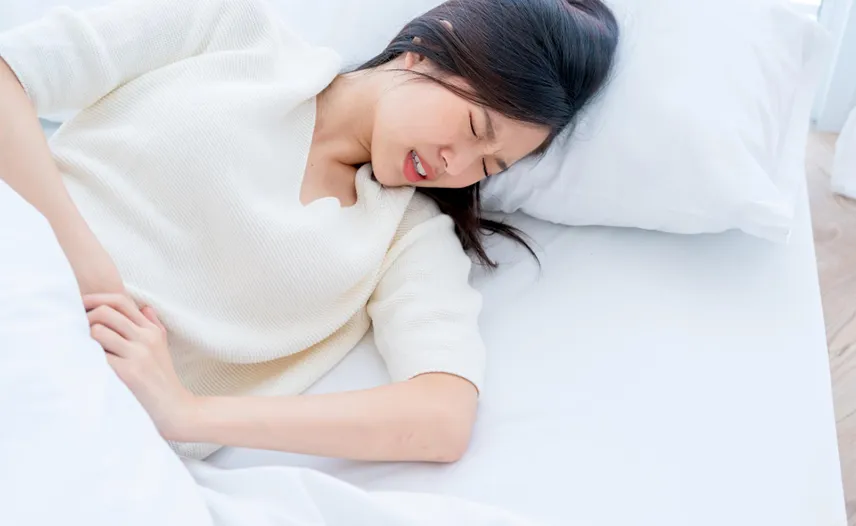
Stiffness or twisting in the fascia can lead to poor circulation and imbalances in the autonomic nervous system.
As a result, the balance of hormone secretion can be disrupted, which may trigger or worsen PMS symptoms.
Our Approach
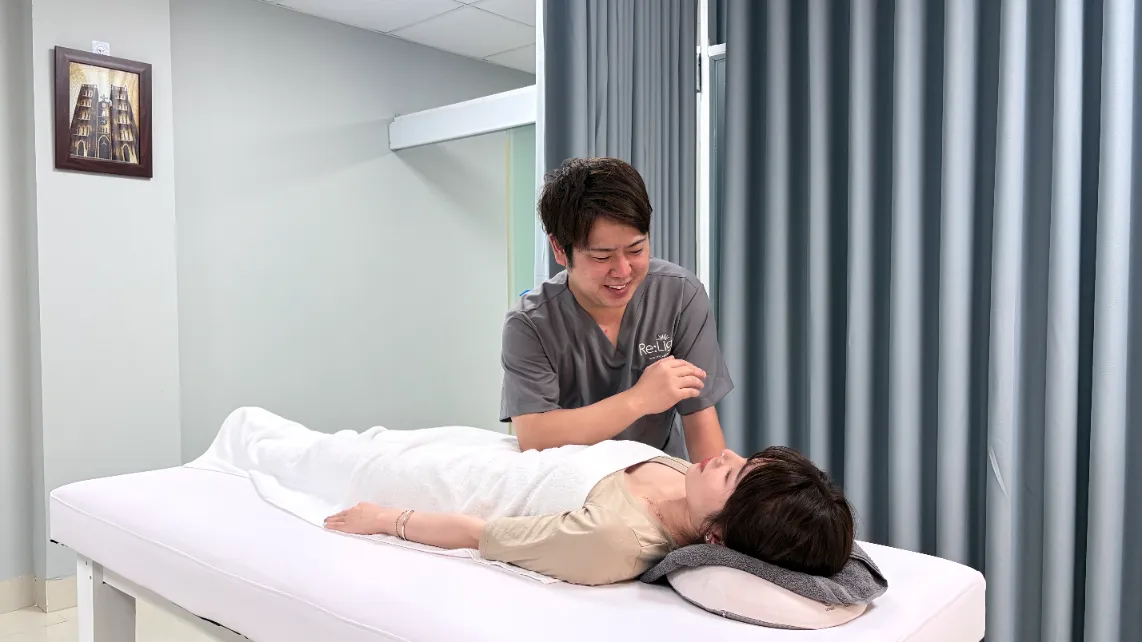
At Re:Light, we approach concerns unique to women by looking beyond specific symptoms and paying attention to whole‑body connections, including daily rhythms, posture, and overall body usage.
Experiences related to PMS or changes felt after childbirth may also be associated with factors such as pelvic balance, physical and mental demands of daily life, and sleep habits, as some people perceive.
During sessions, we incorporate fascia‑based perspectives and gently engage with whole‑body tension and movement awareness, supporting states that feel manageable for both body and mind.
For postnatal care, we also place importance on considering not only physical changes, but also fatigue, mood, and daily routines, while guiding sessions at a pace that feels appropriate for each individual.
Rather than focusing on a single experience, we value ongoing support that helps daily life feel more comfortable, respecting each stage of a woman’s life.